
Contracting authorities link their notices together to provide information on the complete lifecycle of each contract. Linked notices are given the same procurement identifier (OCID). Different notice types are used depending on the procedure type and whether the contract is above or below the relevant threshold.
The following procedure types are allowed:
- Open procedure (above threshold) - for simple, single-stage procurements
- Competitive flexible procedure (above threshold) - where contracting authorities can design a more complex procedure
- Award under framework (above threshold) - also known as framework call-offs
- Direct award (above threshold)
- Below threshold
Using dynamic markets
Above-threshold use of dynamic markets must be through a competitive flexible procedure. Dynamic markets can also be used below threshold, but conditions for membership are not allowed below threshold, except for works contracts above certain values (see Section 85 of the Procurement Act 2023), for schools, or if Welsh or Northern Irish rules apply.
Establishing frameworks
Frameworks can be established using the open procedure, competitive flexible procedure or direct award, and the same noticing requirements apply as for other contracts. Open frameworks cannot be established by direct award.
Open procedure or competitive flexible procedure (above threshold)
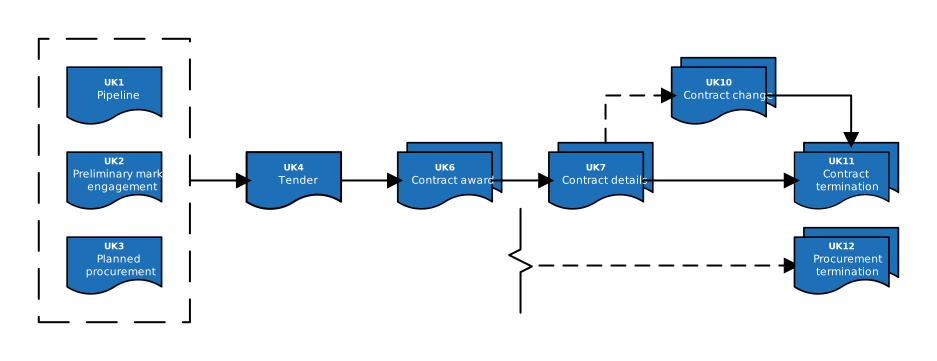
If UK1 pipeline notices, UK2 preliminary market engagement notices or UK3 planned procurement notices are published, this can be done in any order, because there are different triggers for publishing them.
It is required to publish a UK4 tender notice, to invite either tenders or requests to participate. The only exception is if a qualifying utilities dynamic market is being used, in which case the tender notice can optionally be provided only to members of the market, instead of being published.
For UK6 contract award notices, UK7 contract details notices, UK10 contract change notices, UK11 contract termination notices and UK12 procurement termination notices, if there are multiple contracts in the same procurement, then notices might cover more than one contract, or there might be multiple notices each covering a single contract, depending on when the required information is available for each contract.
A UK12 procurement termination notice can be published to cancel a contract that has not been signed. Lots can also be cancelled either before the submission deadline in an edited UK4 tender notice, or after the submission deadline in a UK6 contract award notice.
Award under framework (above threshold)
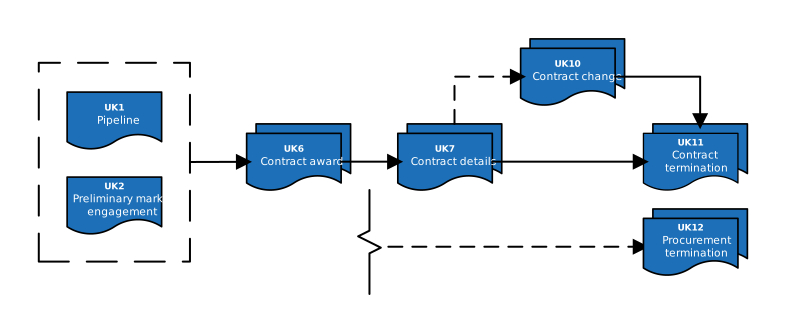
If UK1 pipeline notices or UK2 preliminary market engagement notices are published, this can be done in either order, because there are different triggers for publishing them.
No UK4 tender notice is published. If there is a competitive selection process, then only suppliers on the framework can submit proposals.
For UK6 contract award notices, UK7 contract details notices, UK10 contract change notices, UK11 contract termination notices and UK12 procurement termination notices, if there are multiple contracts in the same procurement, then notices might cover more than one contract, or there might be multiple notices each covering a single contract, depending on when the required information is available for each contract.
A UK12 procurement termination notice can be published to cancel a contract that has not been signed.
Direct award (above threshold)
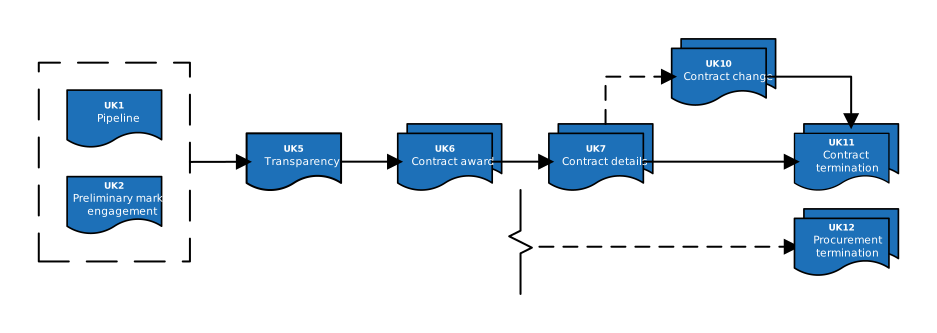
If UK1 pipeline notices or UK2 preliminary market engagement notices are published, this can be done in either order, because there are different triggers for publishing them.
For UK6 contract award notices, UK7 contract details notices, UK10 contract change notices, UK11 contract termination notices and UK12 procurement termination notices, if there are multiple contracts in the same procurement, then notices might cover more than one contract, or there might be multiple notices each covering a single contract, depending on when the required information is available for each contract.
A UK12 procurement termination notice can be published to cancel a contract that has not been signed.
A direct award following an unsuccessful competitive tendering procedure will link to that previous procedure, but is considered a separate process, so will have a different OCID.
Below threshold
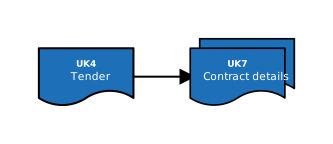
A UK4 tender notice must be published before advertising a below-threshold contract elsewhere.
A UK7 contract details notice must be published for all below-threshold contracts. All other notice types from UK1 to UK12 can also be published, but are not legally required.
If a change to a contract’s value moves it above threshold then a UK10 contract change notice must be published, followed later by a UK11 contract termination notice.
Notices about below-threshold contracts are not required for concession contracts, utilities contracts, schools, or if Northern Irish rules apply.
Dynamic market
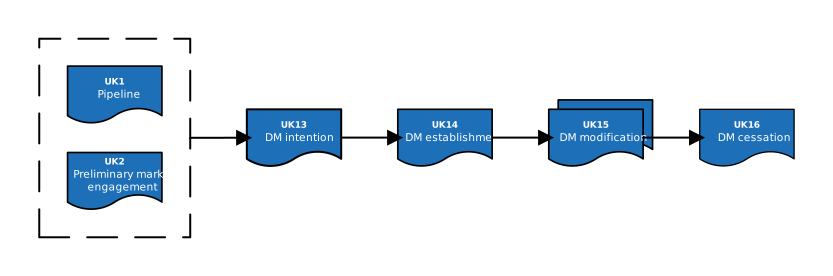
UK1 pipeline notices and UK2 preliminary market engagement notices can be published about dynamic markets as well as contracts, in either order.
Multiple UK15 dynamic market modification notices will be published as suppliers are added and removed from the market over time.